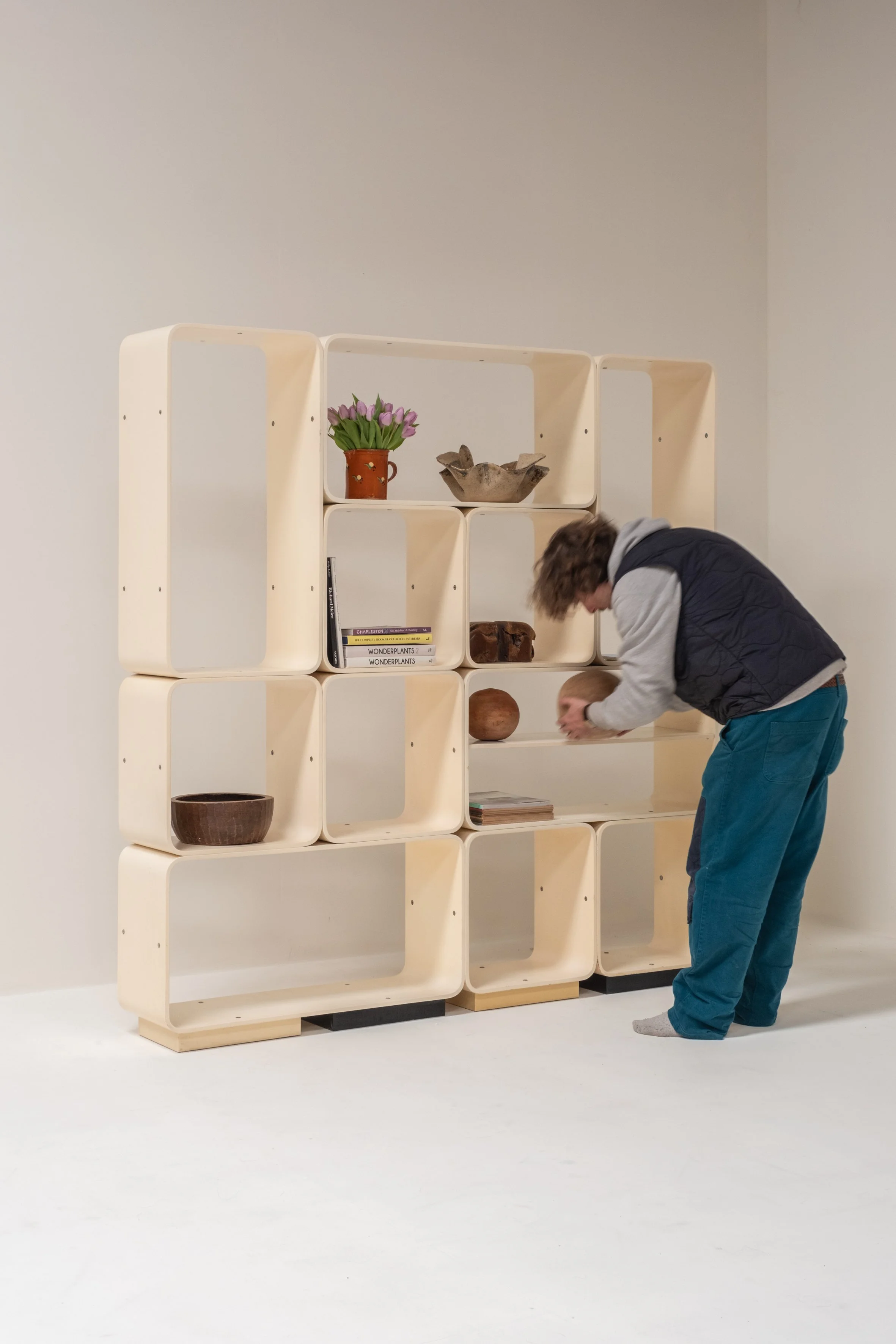
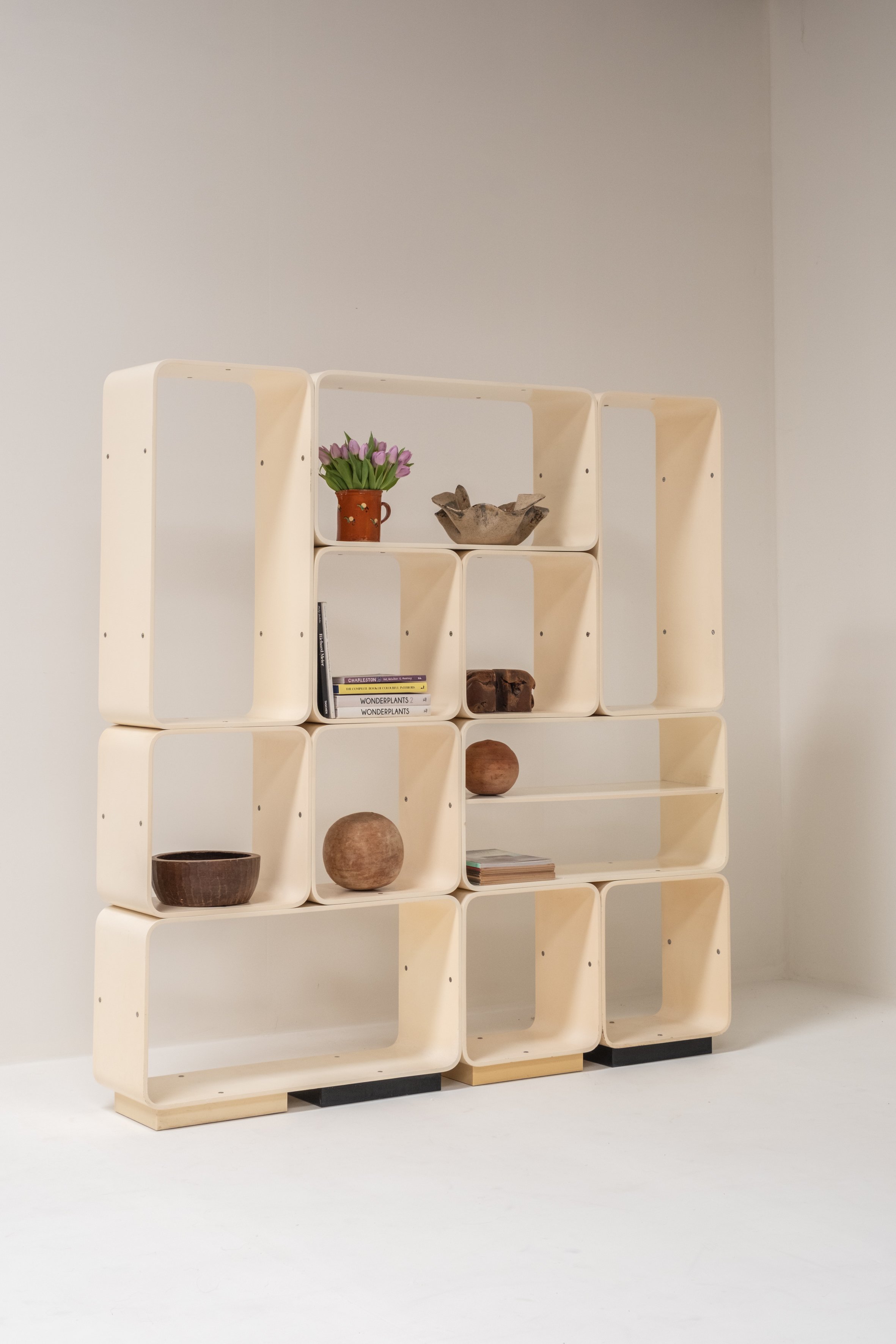
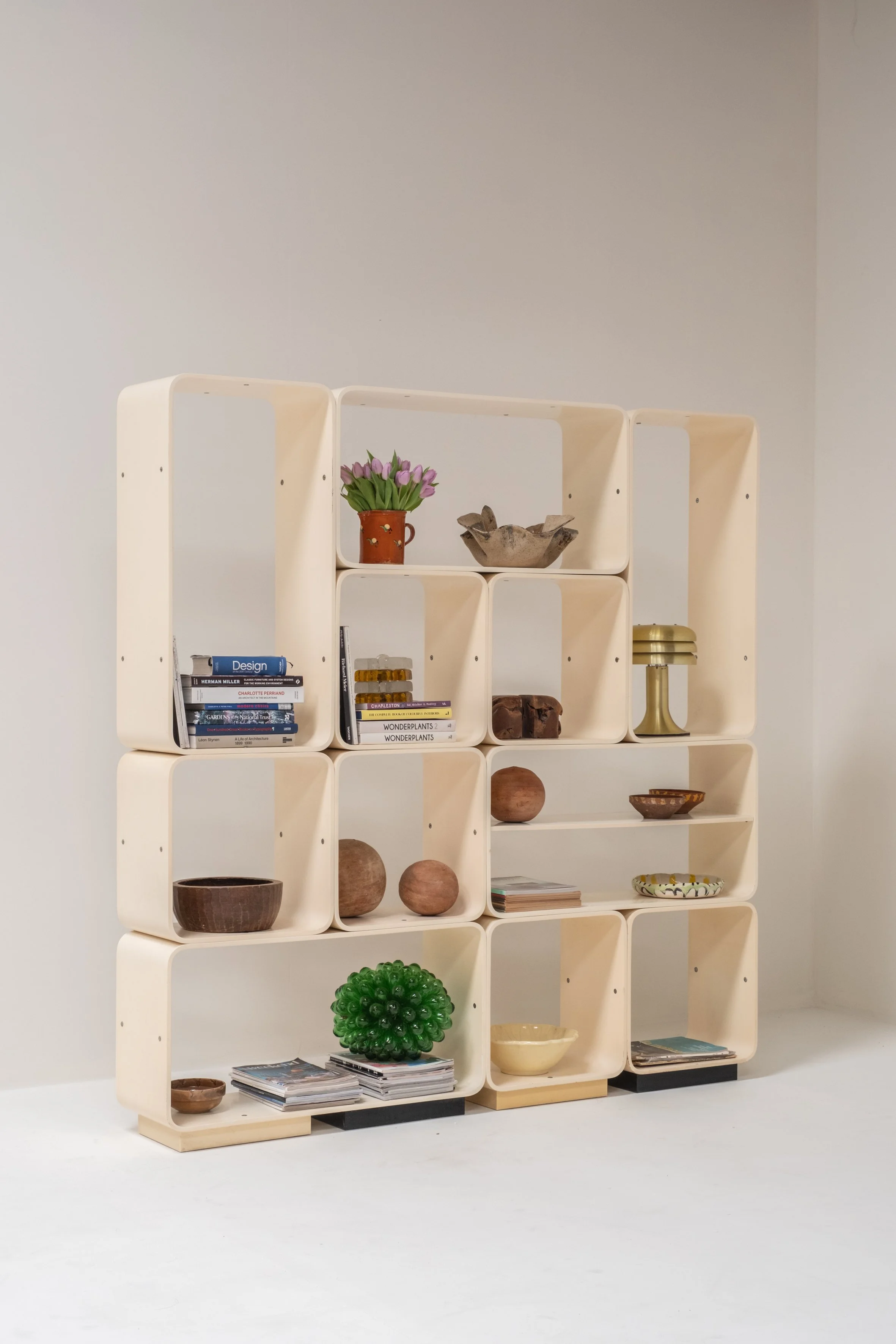
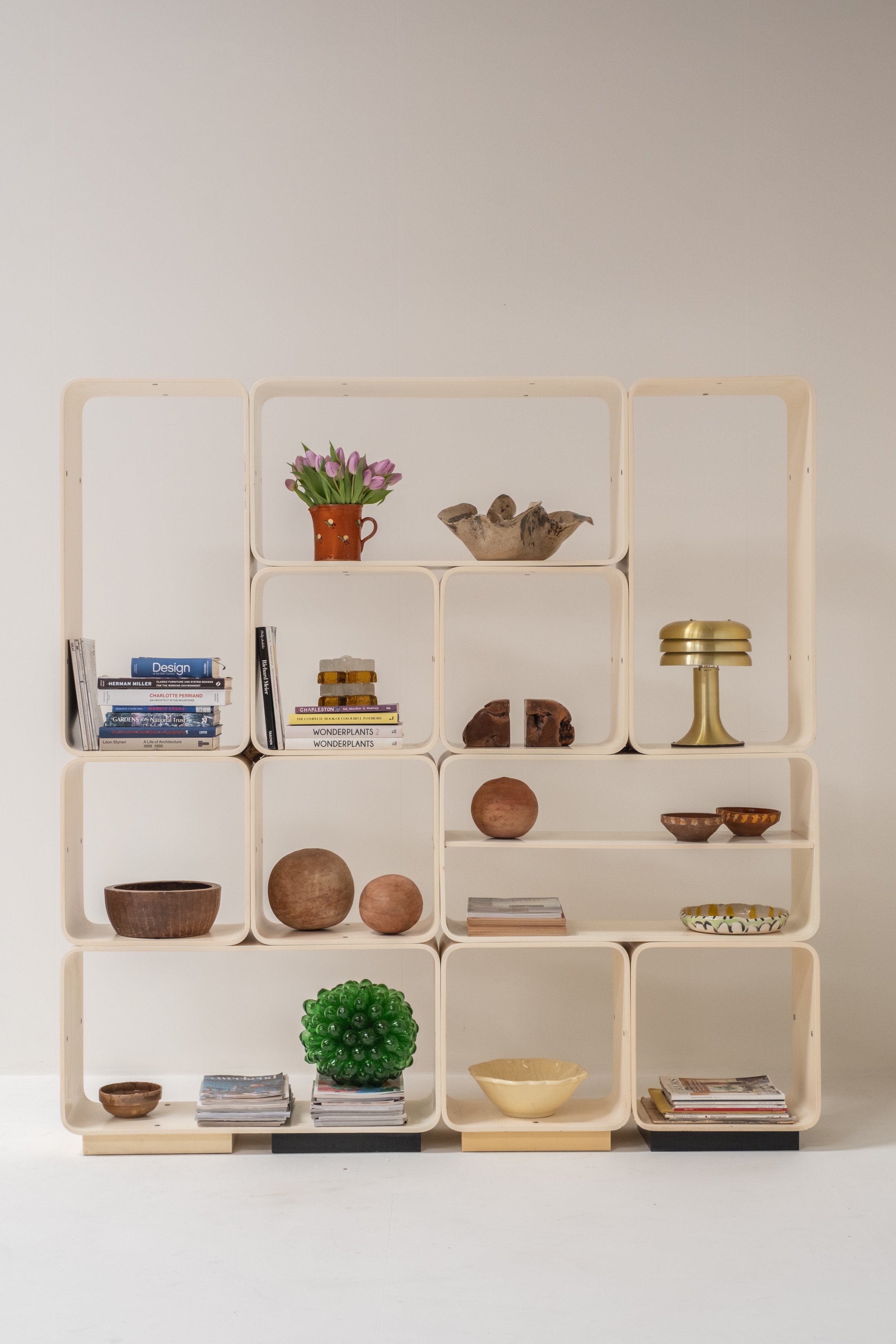
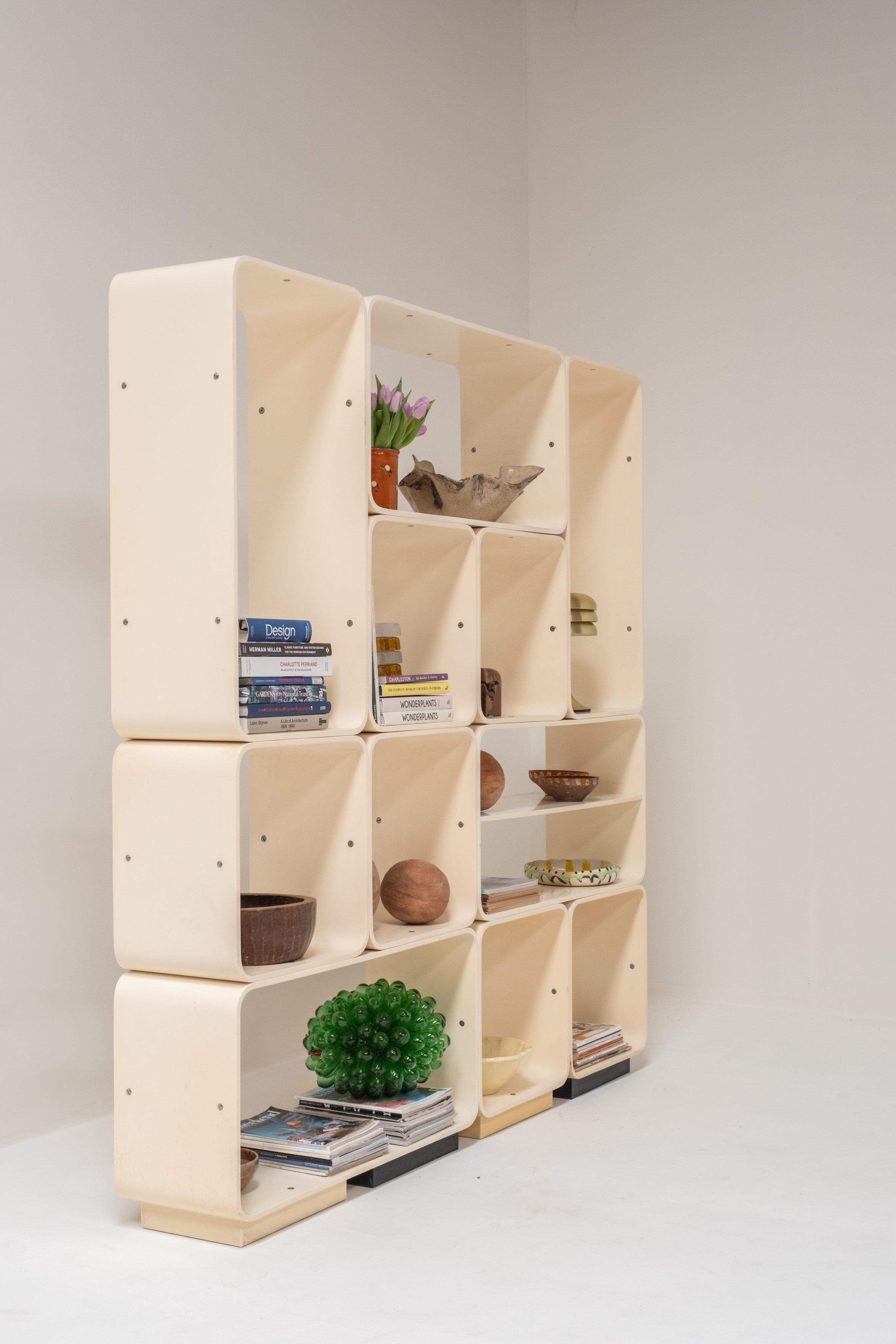
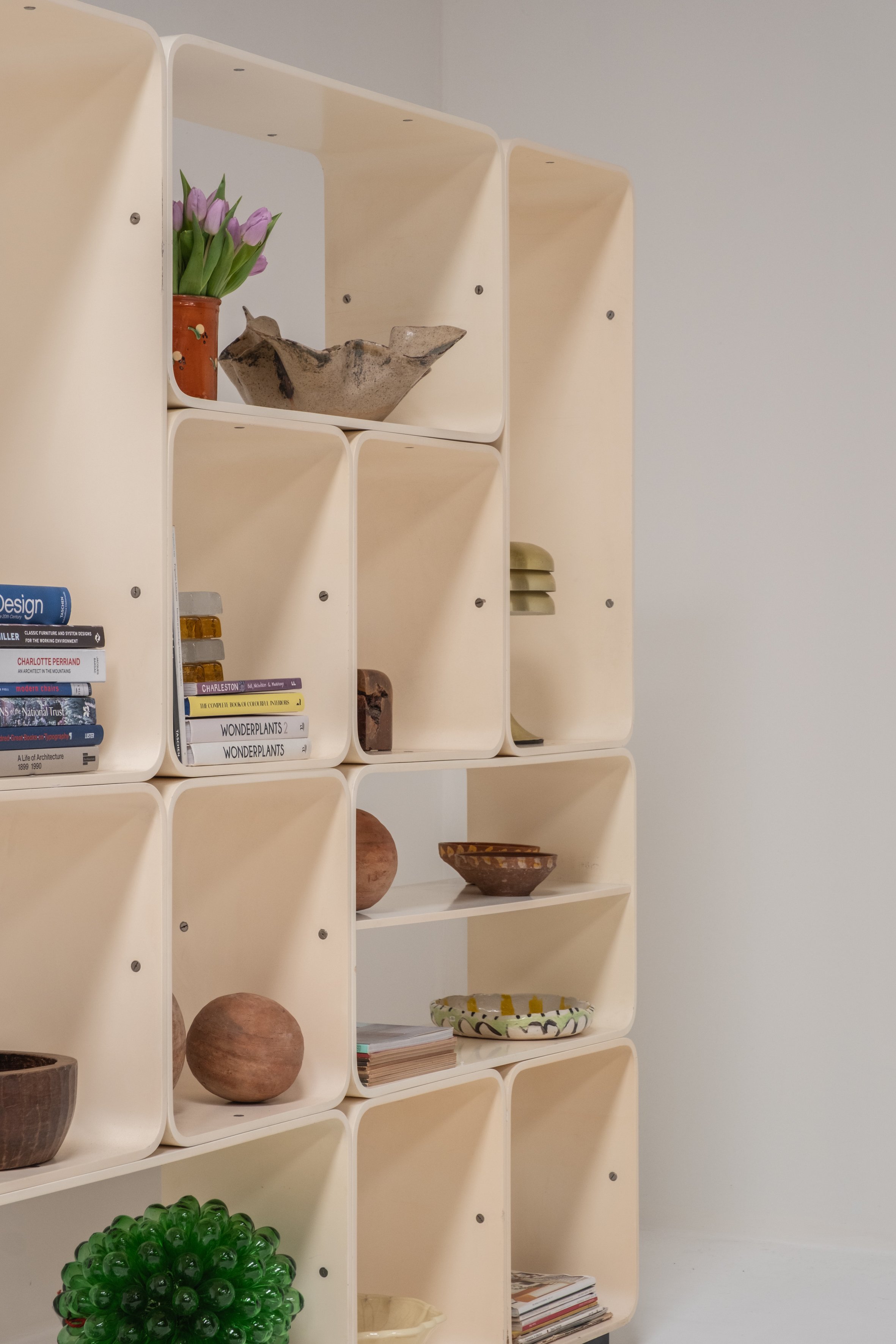
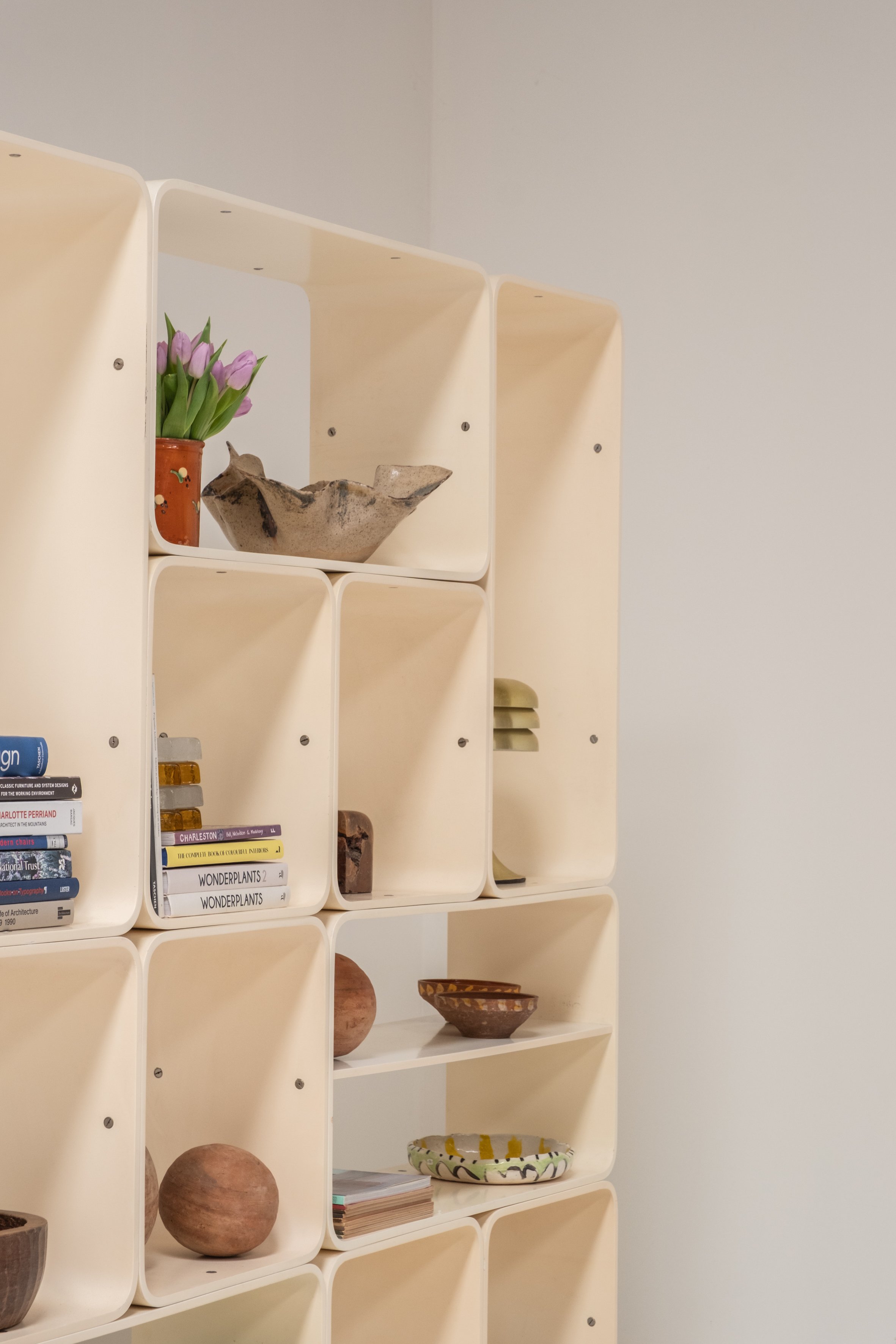
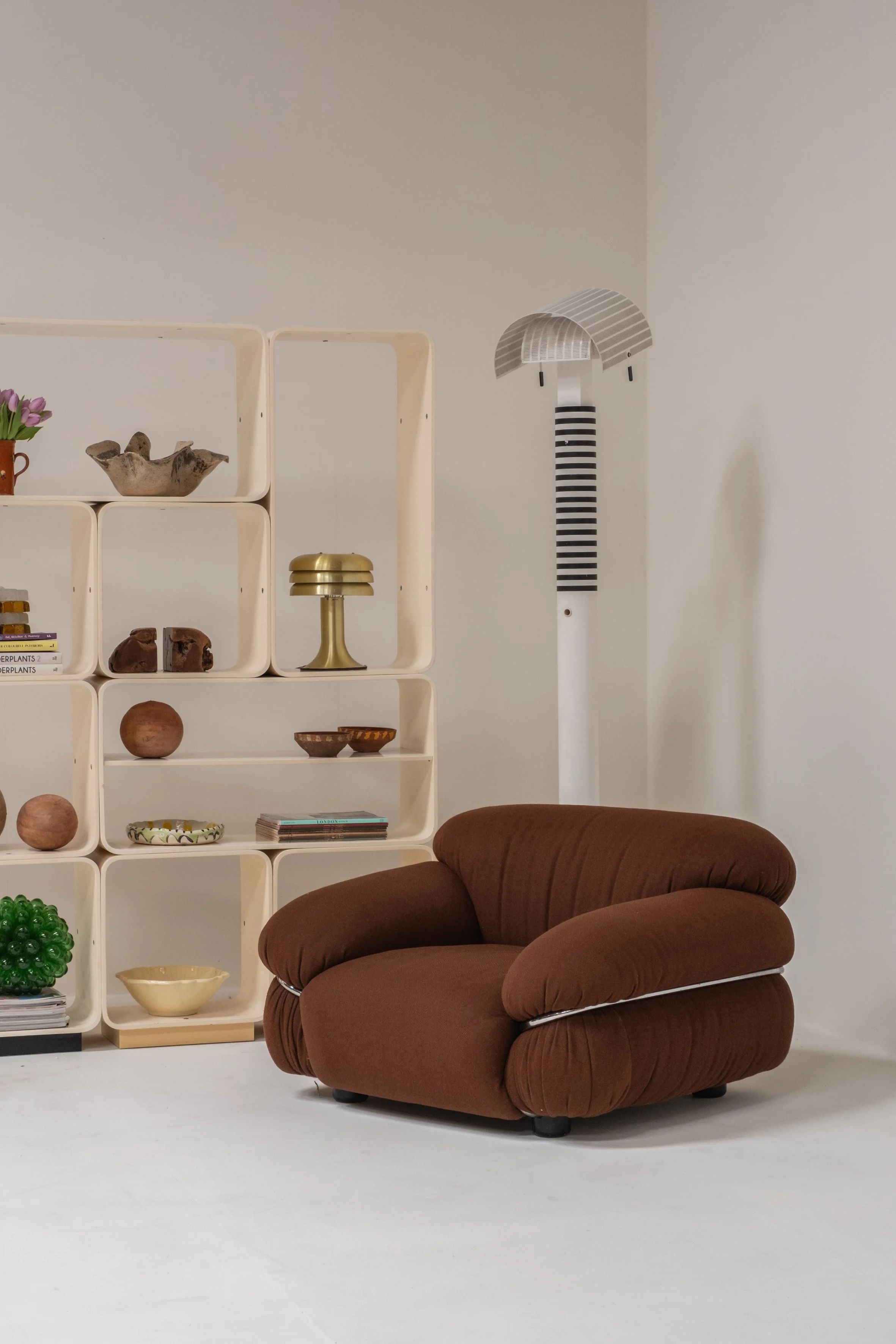
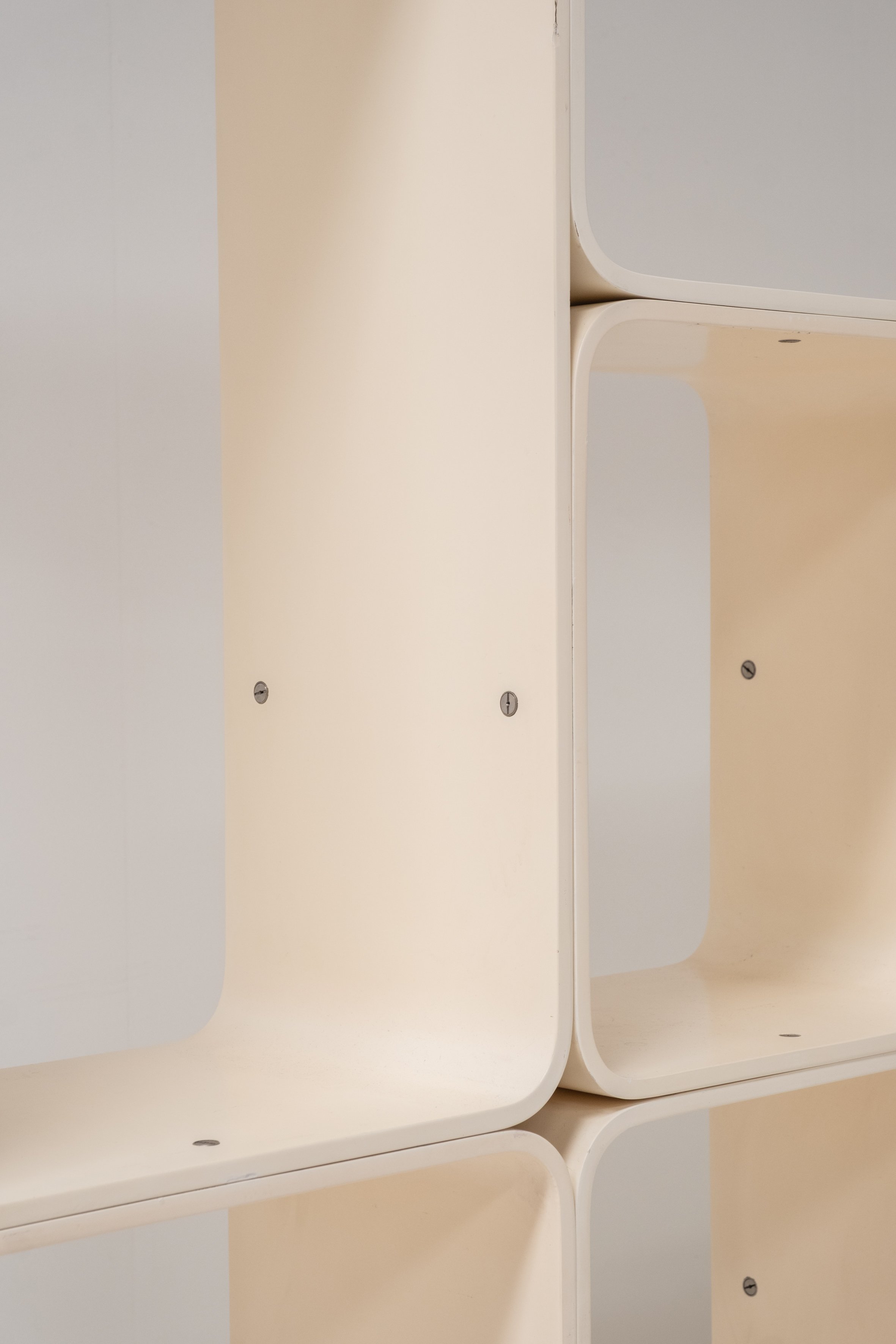
Exceptional and highly important modular wall unit from the celebrated "Aggregabili" series, designed by the Turin-based collective Anonima Design and produced by Bonetto, Italy, in the late 1960s.
Anonima Design was formed by five architects from Turin — Sergio Jaretti, Elio Luzi, Federico Prandi, Viviana Riccato and Mario Virano — whose work explored the boundaries between architecture, furniture and transformable living environments. The Aggregabili collection became one of the group's most ambitious projects, introducing a system of modular elements that could be combined and rearranged according to the user's needs.
This rare configuration consists of seven original panels:
• 2 Surf panels – 116 x 188.5 x 3.4 cm
• 4 Faro panels – 58 x 188.5 x 3.4 cm
• 2 Medusa panels – 116 x 188.5 x 3.4 cm
• 1 Pesci panel – 58 x 188.5 x 3.4 cm
The Faro panels incorporate integrated lighting elements. The electrical system has been professionally renewed and each light conceals a mirror behind the lamp housing, revealed when the fixture is pulled forward. The Medusa and Pesci panels feature the iconic fold-down shelving elements characteristic of the series, allowing the composition to alternate between a sculptural wall installation and a functional storage system.
The architectural character of the design clearly reflects the background of its creators. Even in its closed position, the composition reads as a large-scale geometric artwork, while opening the shelves transforms it into a highly functional wall unit.
Installation is remarkably simple thanks to the integrated rear mounting system with only two attachment points per panel.
Complete Aggregabili compositions of this scale are exceptionally rare. To our knowledge, this is the only example of this size currently available worldwide, making it an important opportunity for collectors of radical Italian design, modular furniture, and late modernist architecture.
Italy, circa 1969.
Condition:
Very good vintage condition with minor age-related wear. The electrical system has been renewed and is fully functional.
Exceptional and highly important modular wall unit from the celebrated "Aggregabili" series, designed by the Turin-based collective Anonima Design and produced by Bonetto, Italy, in the late 1960s.
Anonima Design was formed by five architects from Turin — Sergio Jaretti, Elio Luzi, Federico Prandi, Viviana Riccato and Mario Virano — whose work explored the boundaries between architecture, furniture and transformable living environments. The Aggregabili collection became one of the group's most ambitious projects, introducing a system of modular elements that could be combined and rearranged according to the user's needs.
This rare configuration consists of seven original panels:
• 2 Surf panels – 116 x 188.5 x 3.4 cm
• 4 Faro panels – 58 x 188.5 x 3.4 cm
• 2 Medusa panels – 116 x 188.5 x 3.4 cm
• 1 Pesci panel – 58 x 188.5 x 3.4 cm
The Faro panels incorporate integrated lighting elements. The electrical system has been professionally renewed and each light conceals a mirror behind the lamp housing, revealed when the fixture is pulled forward. The Medusa and Pesci panels feature the iconic fold-down shelving elements characteristic of the series, allowing the composition to alternate between a sculptural wall installation and a functional storage system.
The architectural character of the design clearly reflects the background of its creators. Even in its closed position, the composition reads as a large-scale geometric artwork, while opening the shelves transforms it into a highly functional wall unit.
Installation is remarkably simple thanks to the integrated rear mounting system with only two attachment points per panel.
Complete Aggregabili compositions of this scale are exceptionally rare. To our knowledge, this is the only example of this size currently available worldwide, making it an important opportunity for collectors of radical Italian design, modular furniture, and late modernist architecture.
Italy, circa 1969.
Condition:
Very good vintage condition with minor age-related wear. The electrical system has been renewed and is fully functional.

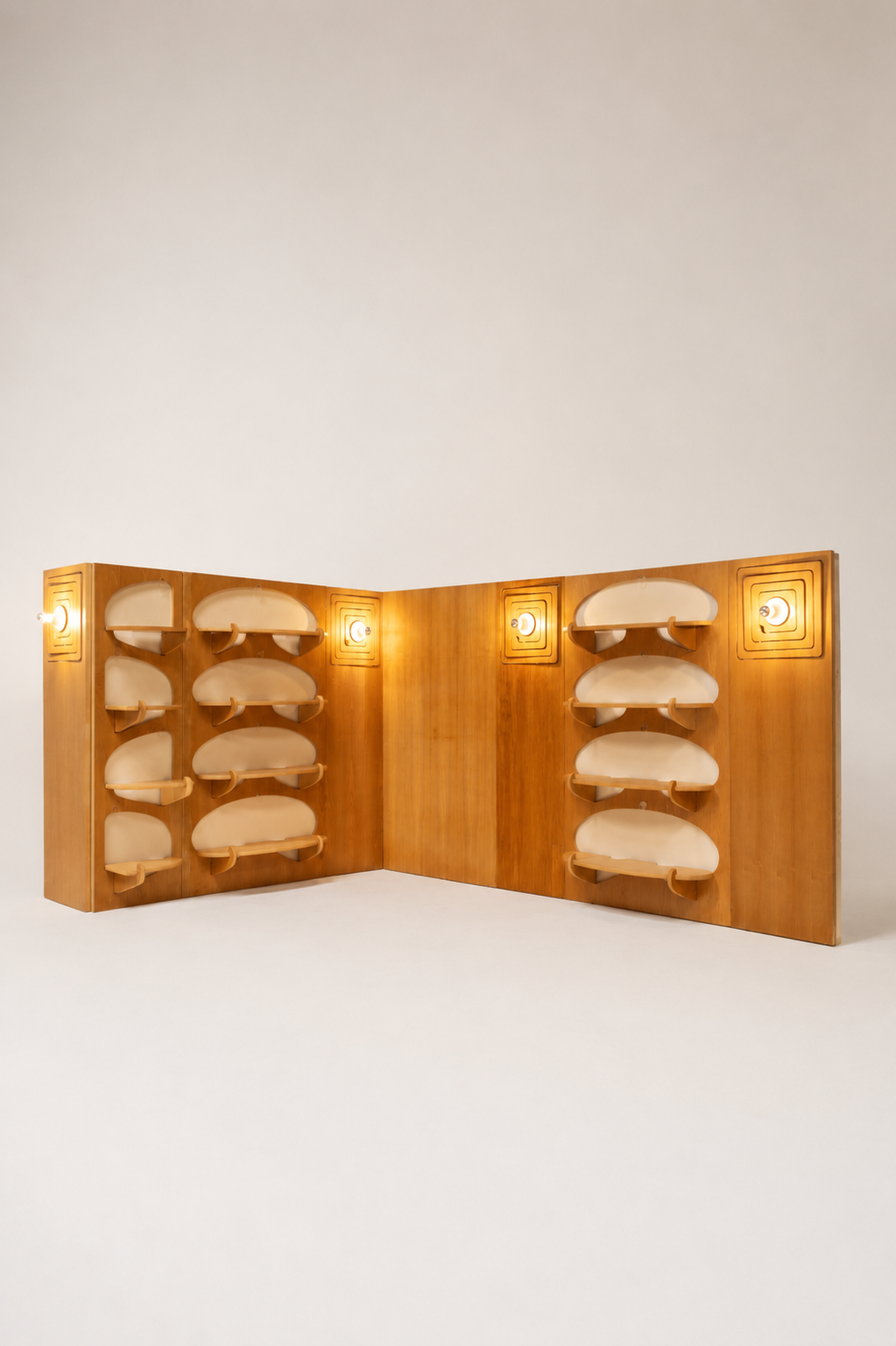 Image 1 of 12
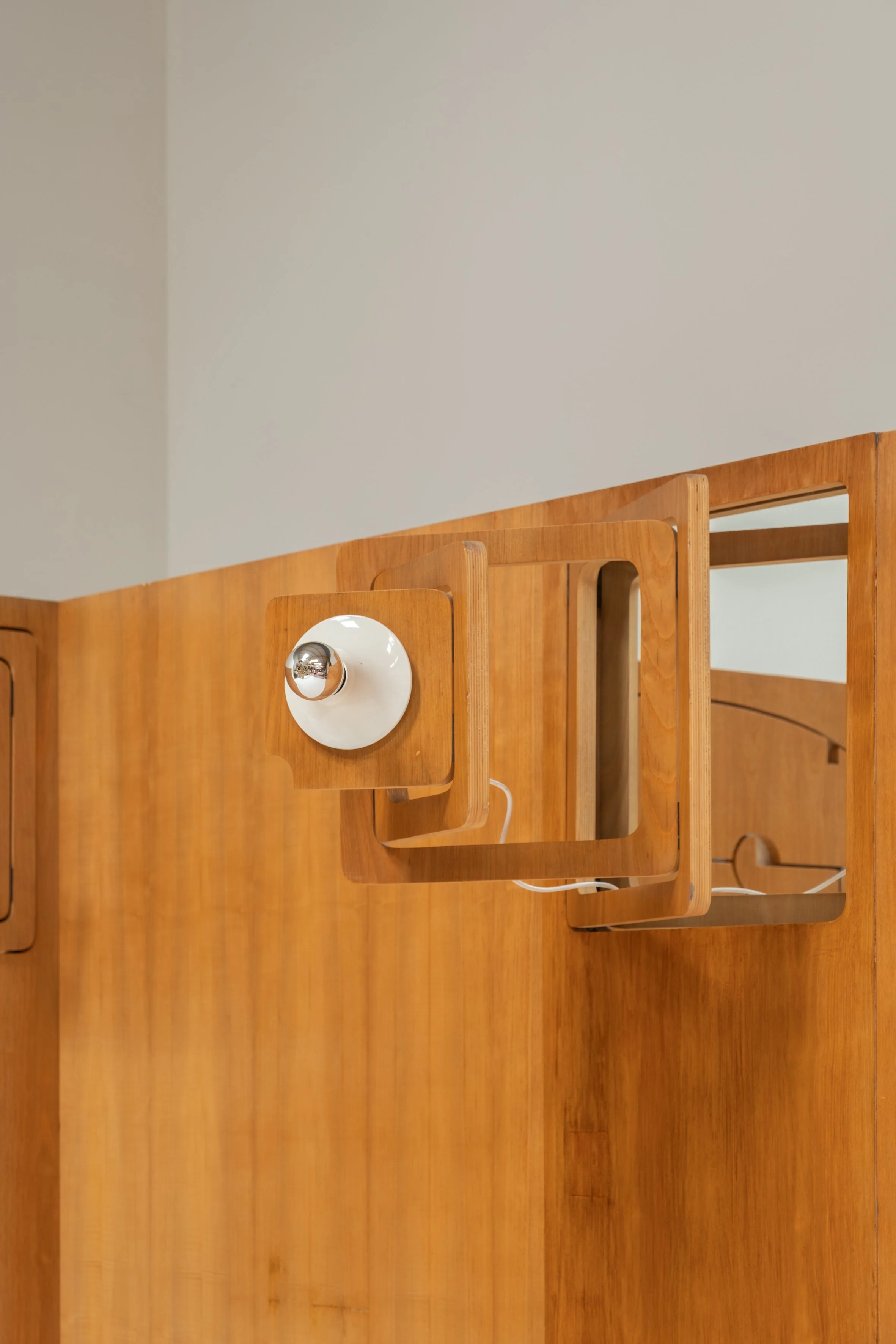 Image 2 of 12
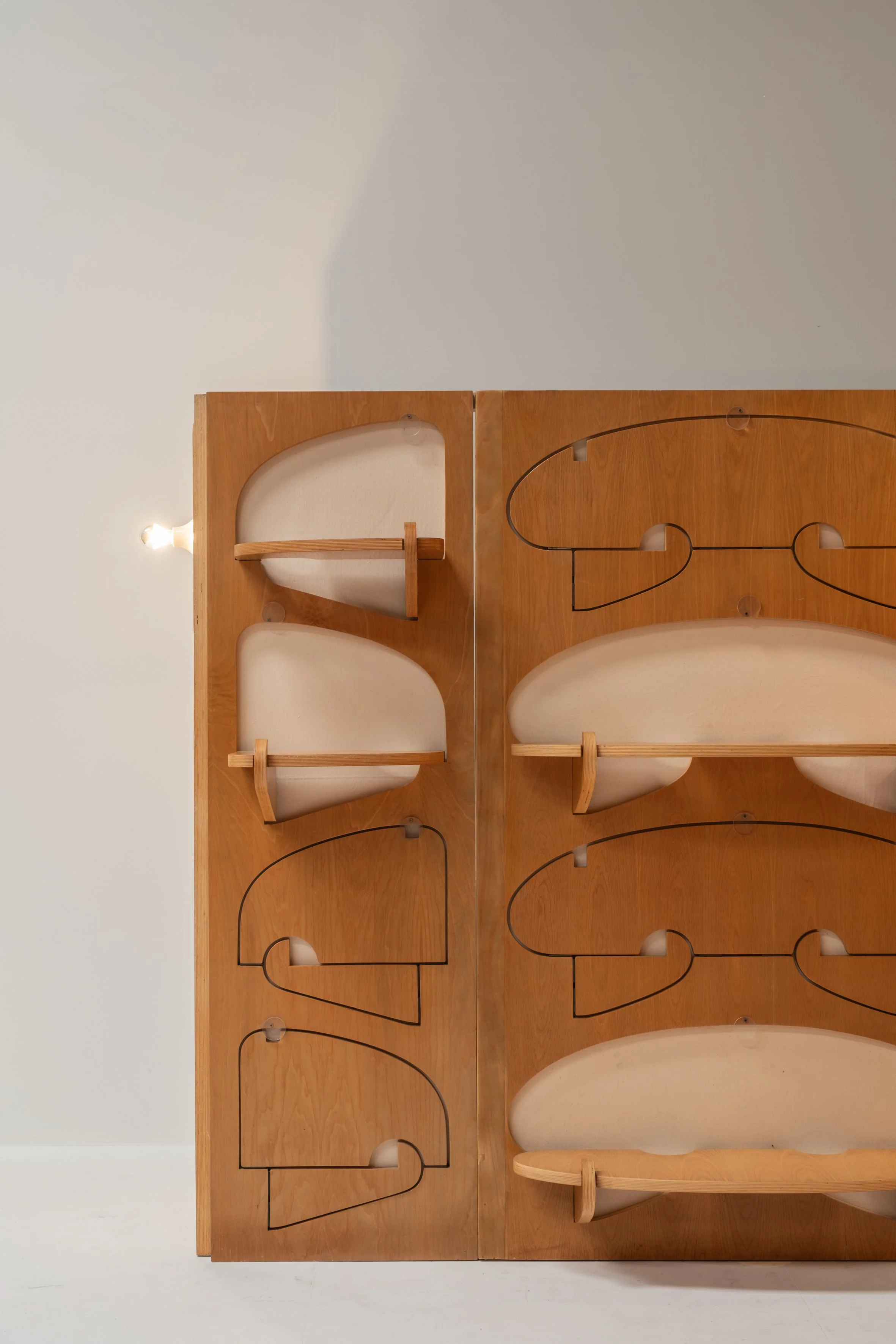 Image 3 of 12
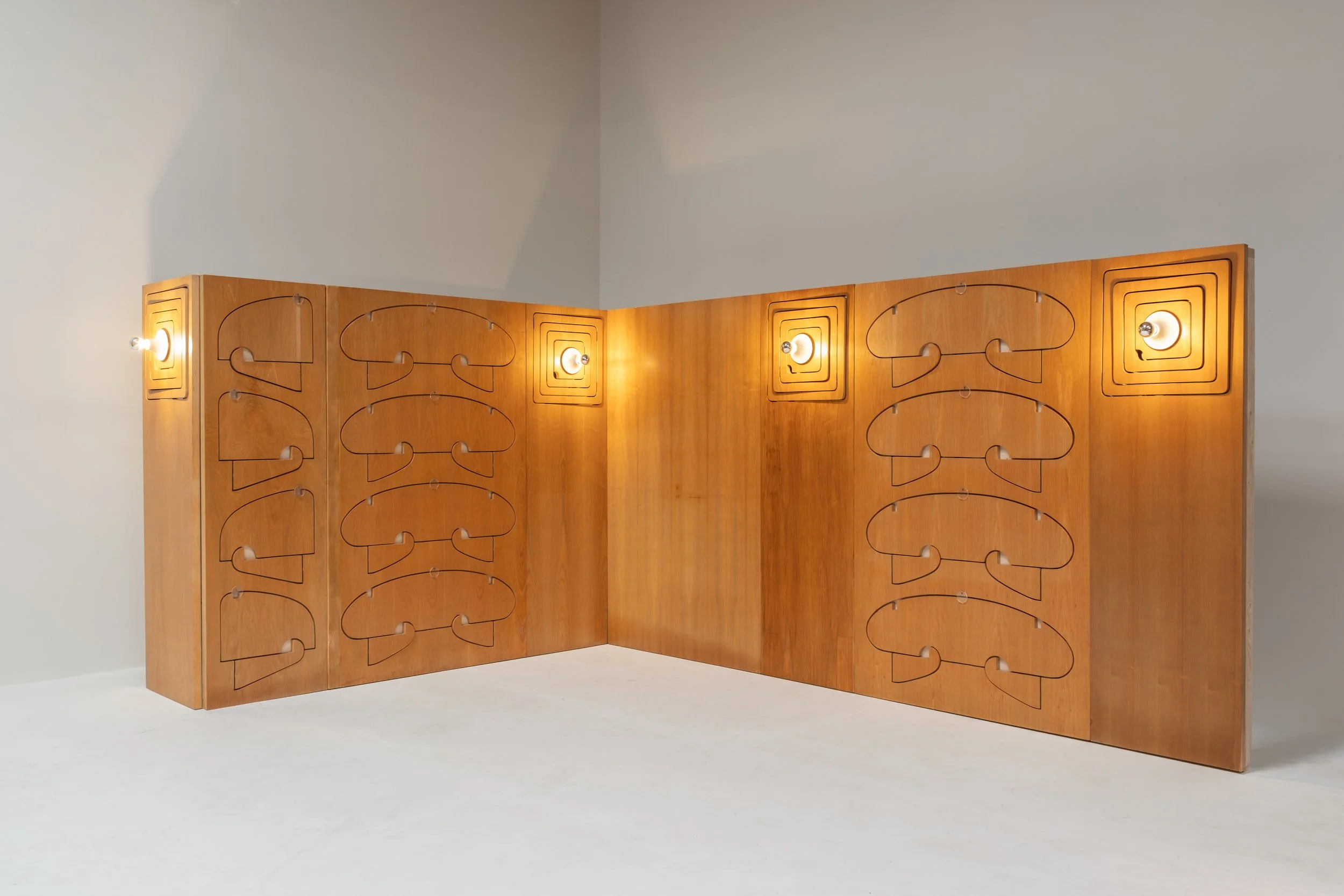 Image 4 of 12
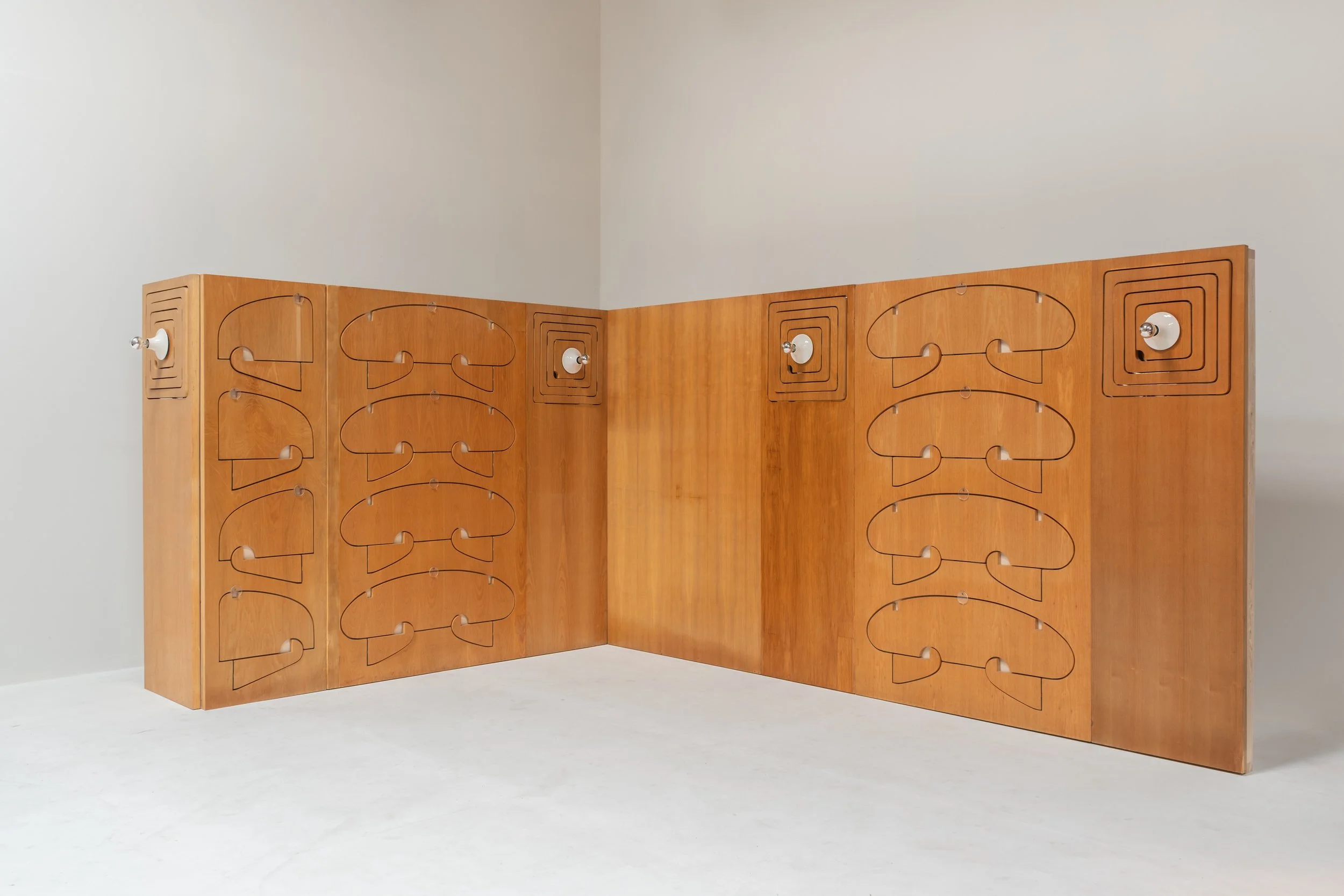 Image 5 of 12
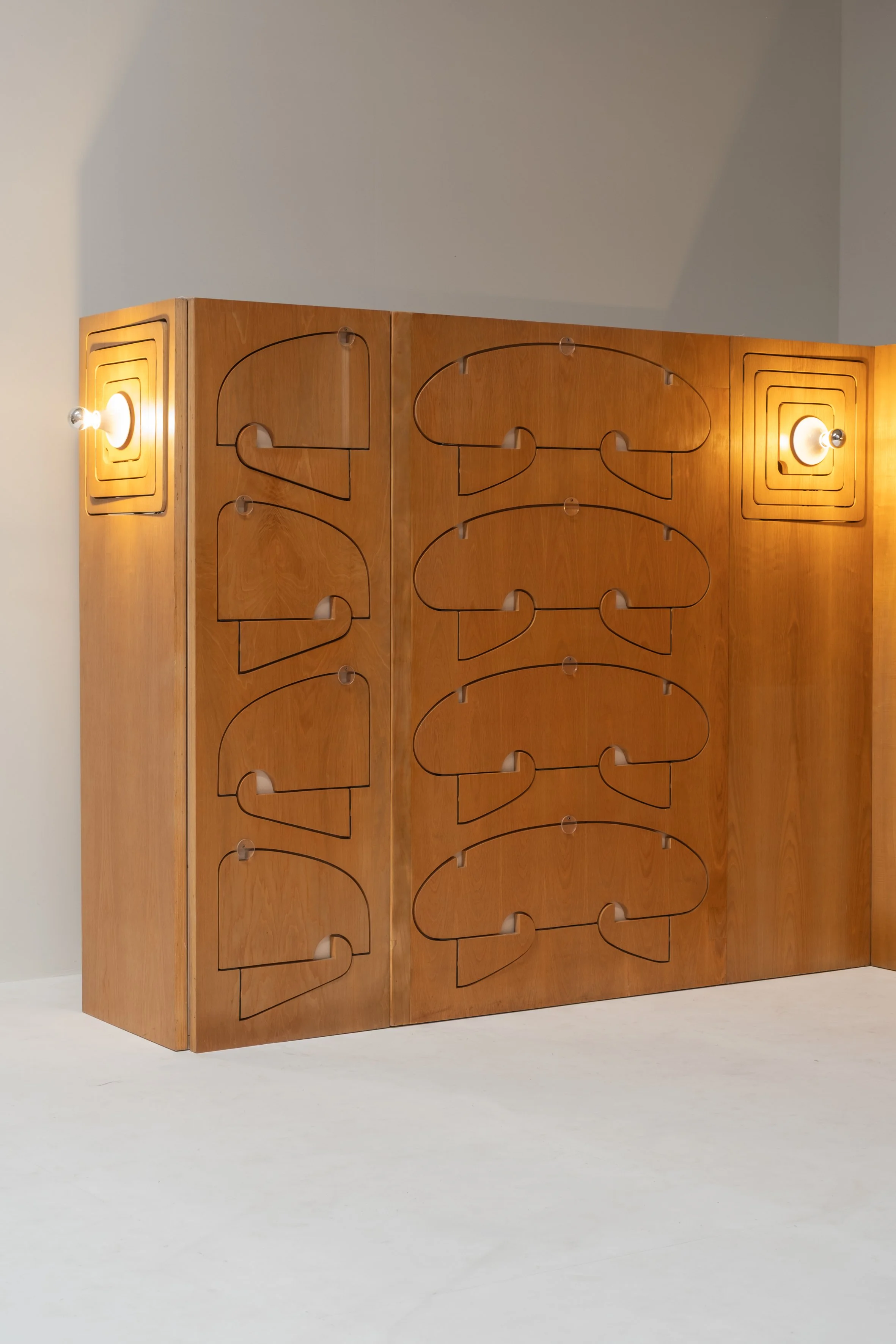 Image 6 of 12
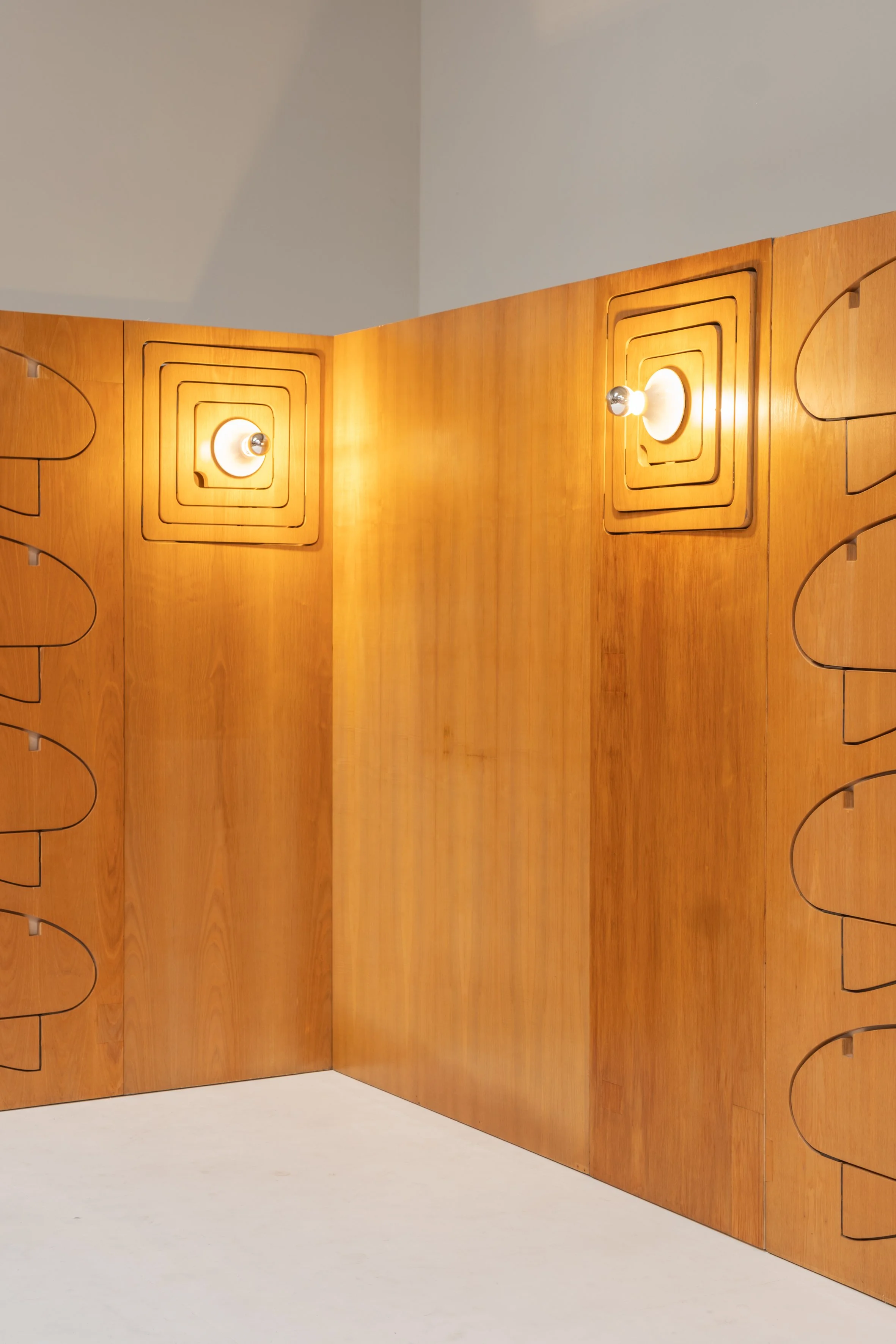 Image 7 of 12
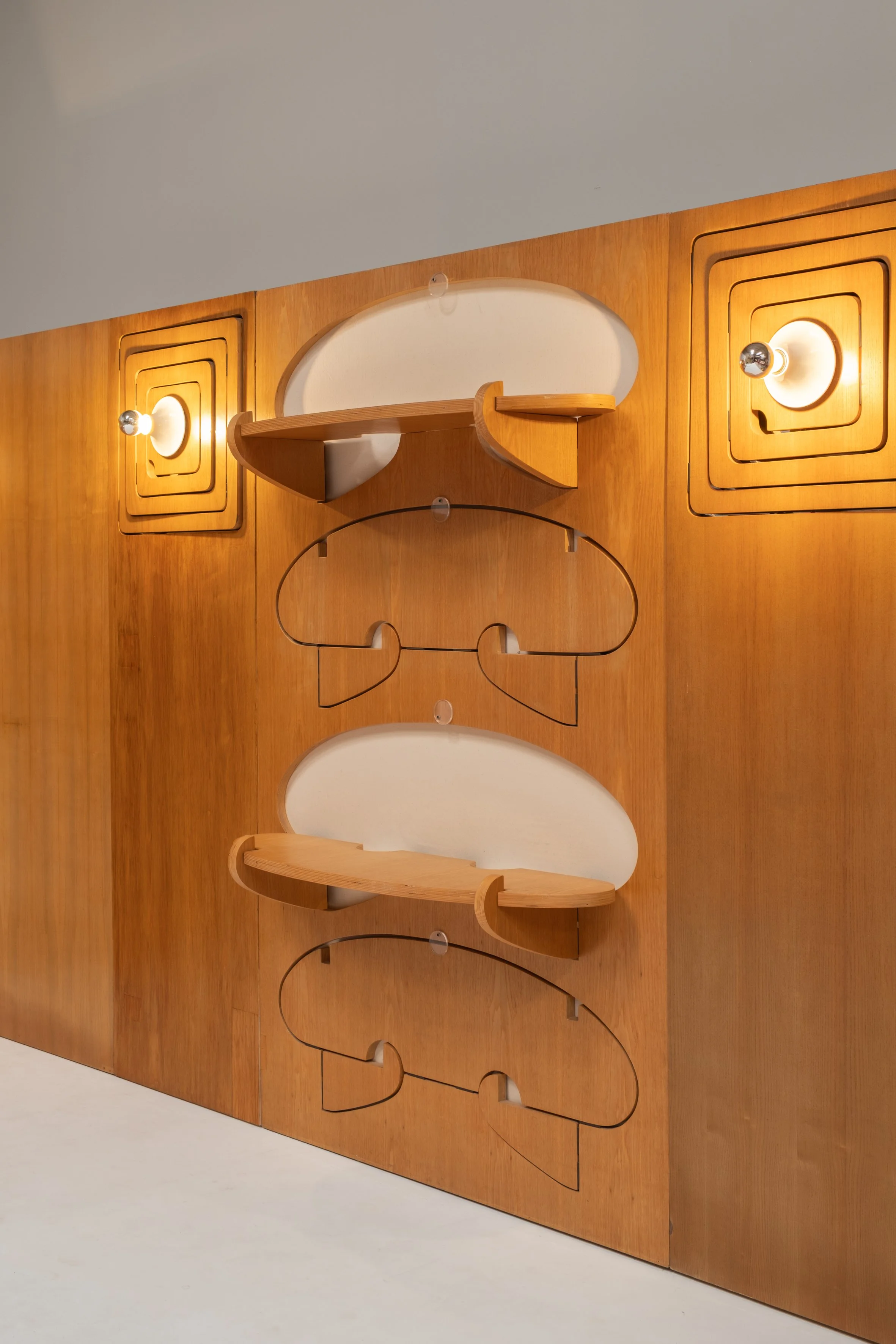 Image 8 of 12
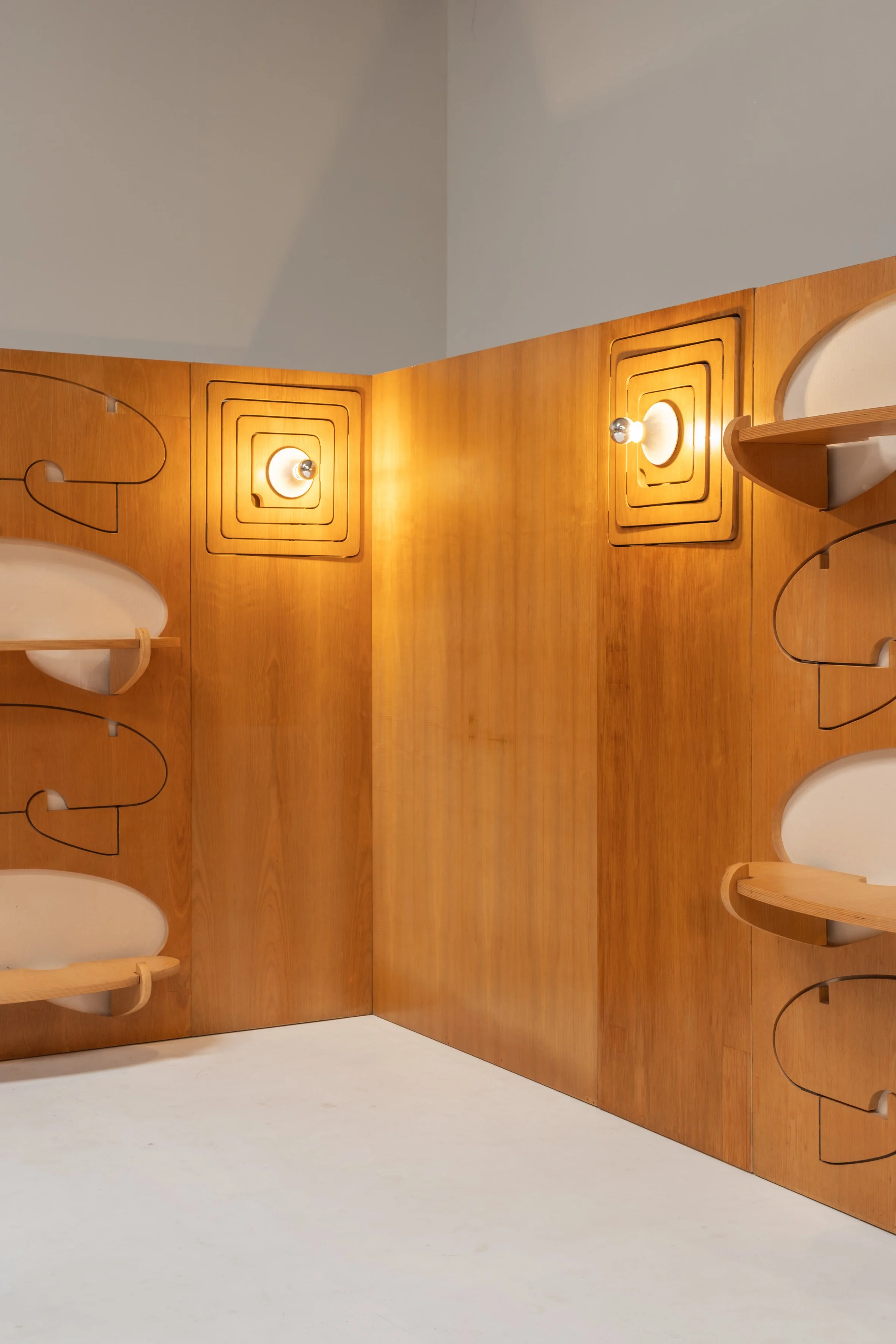 Image 9 of 12
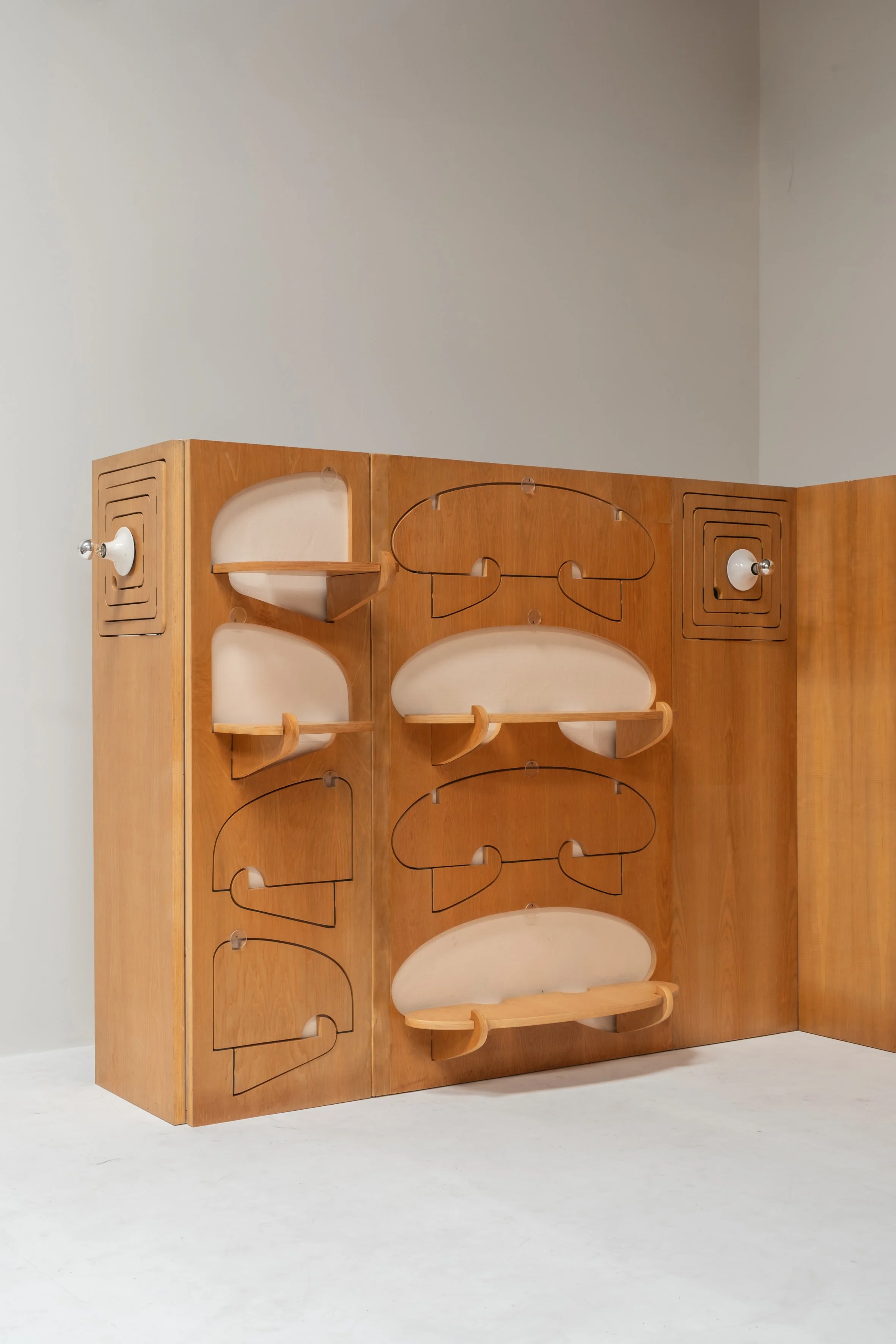 Image 10 of 12
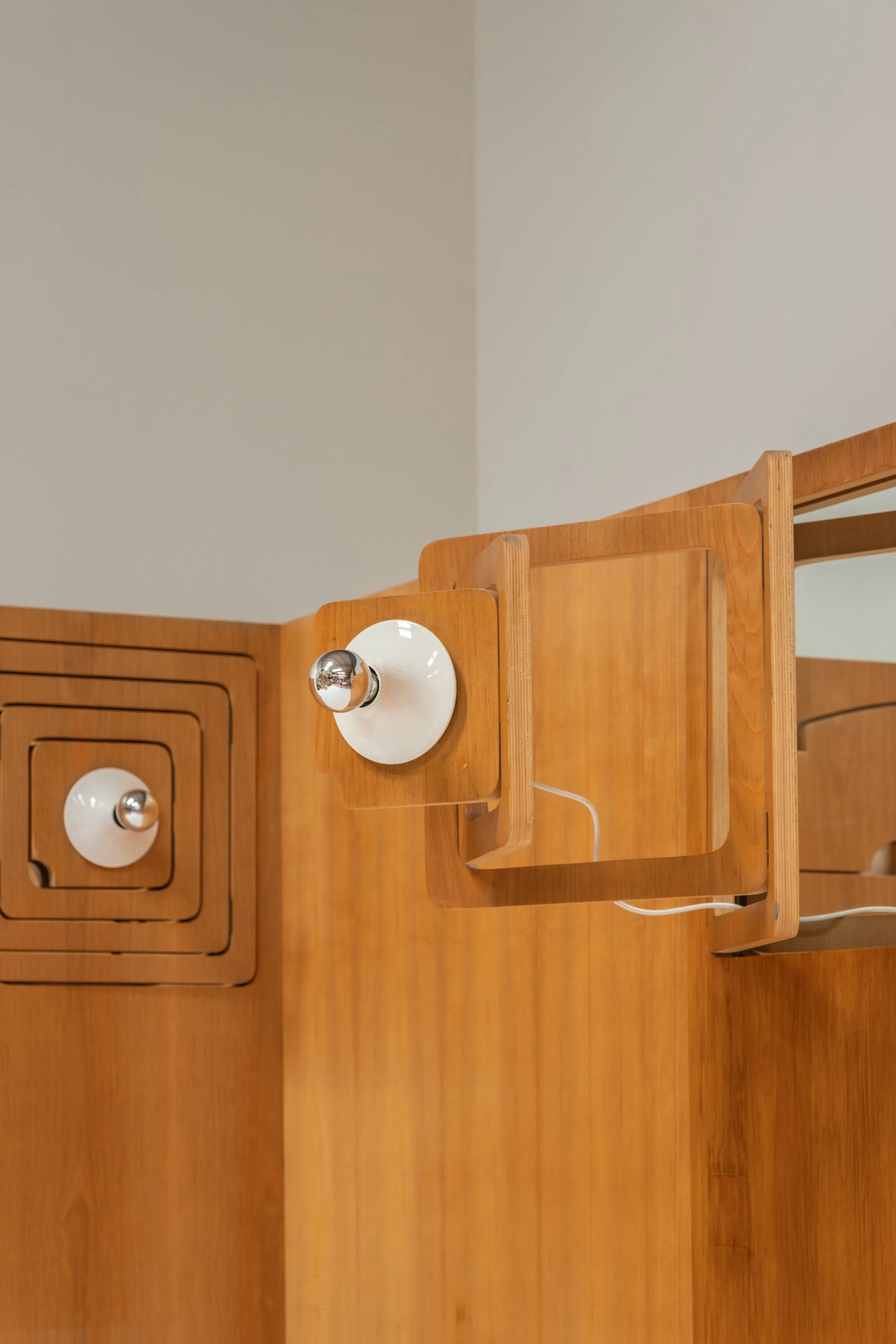 Image 11 of 12
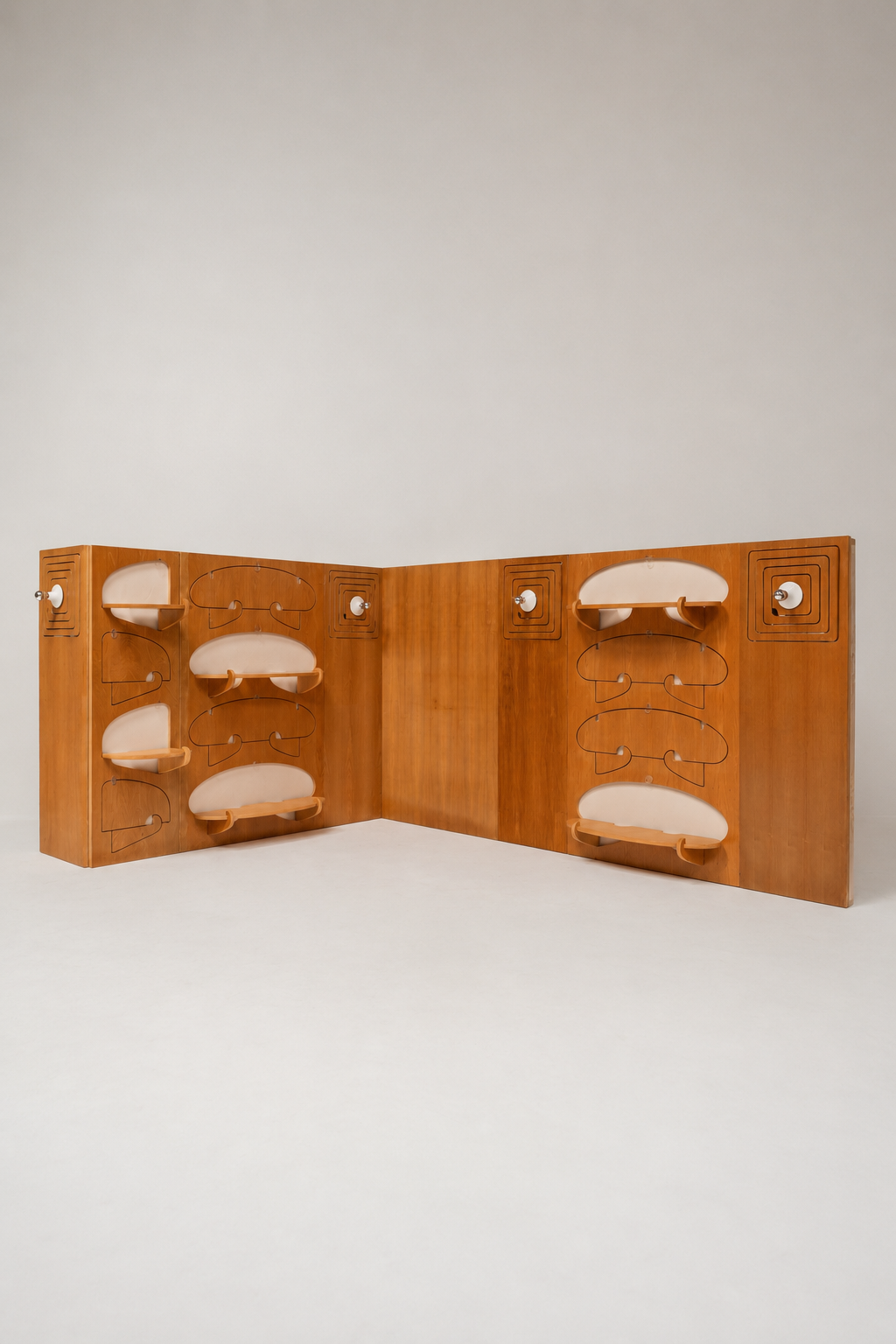 Image 12 of 12